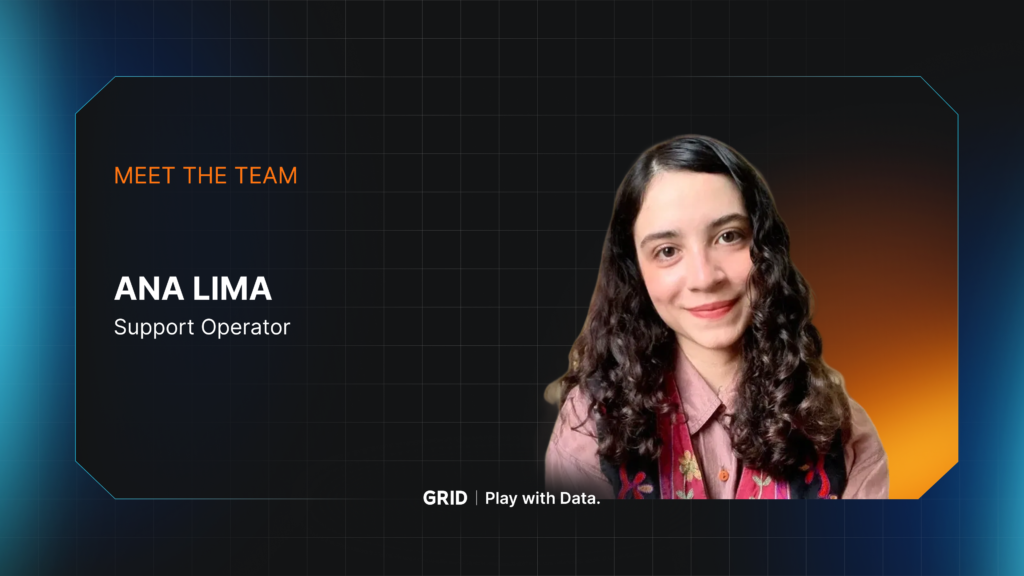
Meet Ana Lima, GRID’s Support Operator, who combines her intuition and deep technical background to keep tournaments running smoothly behind the scenes. In our conversation, she explains how spotting patterns before they become problems and bridging the gap between teams and customers are what make support one of the most powerful roles in esports, sharing insights from her day-to-day work, her path into the industry, and the strategies that keep her at the top of her game.
You describe yourself as intuitive and detail-oriented, someone who often senses issues before they fully surface. How does that instinct show up in your day-to-day work as a Support Operator at GRID?
When I start my shift, my first step is to understand what has happened before I came in and to identify ongoing trends across tournaments. Each tournament has its own recurring patterns and challenges, so past data and experience help me anticipate what I should be monitoring more closely.
I also pay close attention to the concerns raised by customers and tournament organizers. When I notice recurring questions or emerging patterns, I know it’s a signal to be more proactive rather than reactive. This allows me to focus on prevention, adjust my priorities early, and address potential issues before they escalate.
With a background in IT and years in esports, you bring both technical understanding and a people-first mindset. How do those two sides come together when you’re supporting tournaments and customers across different platforms and time zones?
The esports ecosystem is inherently technical and highly dependent on complex platforms. Having a background in IT allows me to understand these systems more deeply, which helps me identify issues faster and anticipate the concerns of both tournament organizers and customers.
At the same time, my experience in esports has taught me the importance of communication and empathy. I’m able to translate technical problems into clear, accessible language, making sure people from different backgrounds and time zones feel supported and understood. This combination of technical knowledge and a people-first approach allows me to provide effective, human-centered support.
Support at GRID works closely with organizers, engineers, and product teams. From your perspective, what makes support such a critical bridge inside the company and where do you feel your contributions make the biggest difference?
Support operations play a crucial role in ensuring that issues don’t reach the customer, acting as a protective layer between the product and the end user. By anticipating potential problems and addressing them early, we help maintain a stable, reliable experience that builds trust in the platform.
At the same time, support is essential in making customers feel heard and understood. Because we work closely with clients and interact daily with the same platforms they use, we gain valuable insight into pain points, recurring issues, and opportunities for improvement. Our biggest contribution comes from identifying these patterns and translating real-world feedback into actionable information for engineering and product teams. This helps drive continuous improvements and ensures the product evolves based on actual user needs.
You’ve experienced esports from different environments, from studying IT to working hands-on in the industry. For someone passionate about esports but unsure where they fit, what makes a support role a strong entry point or long-term career path?
A support role offers a unique perspective on the esports industry because it naturally connects with many areas of the business. By communicating daily with technical teams, tournament organizers, product, and customers, support operators gain a broad understanding of how the ecosystem operates.
Support is a strong entry point because it exposes you to multiple career paths, from technical and IT-focused roles to tournament operations and even secondary markets that exist around esports through our clients. Over time, this hands-on experience builds both technical knowledge and industry awareness, making support not only a gateway into esports but also a sustainable long-term career path for those who enjoy problem-solving, collaboration, and continuous learning.
Between gnome collecting, baking choux cream, Qi Gong practice, and binge-watching Star Trek with hot chocolate and your cats, what’s the most “off-grid” thing you do to fully unwind?
I really enjoy spending time in nature, completely away from screens. Outdoor walks and quiet moments outside help me reset and maintain the mental clarity and focus I need, especially because I work on a computer and enjoy watching TV shows and playing games in my free time.
Look out for the next edition of Meet the Team!
If you are interested in learning more about GRID or current job openings, head to our career page.
Follow us on Linkedin and X and stay up to date with all the news from GRID.